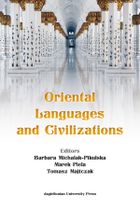
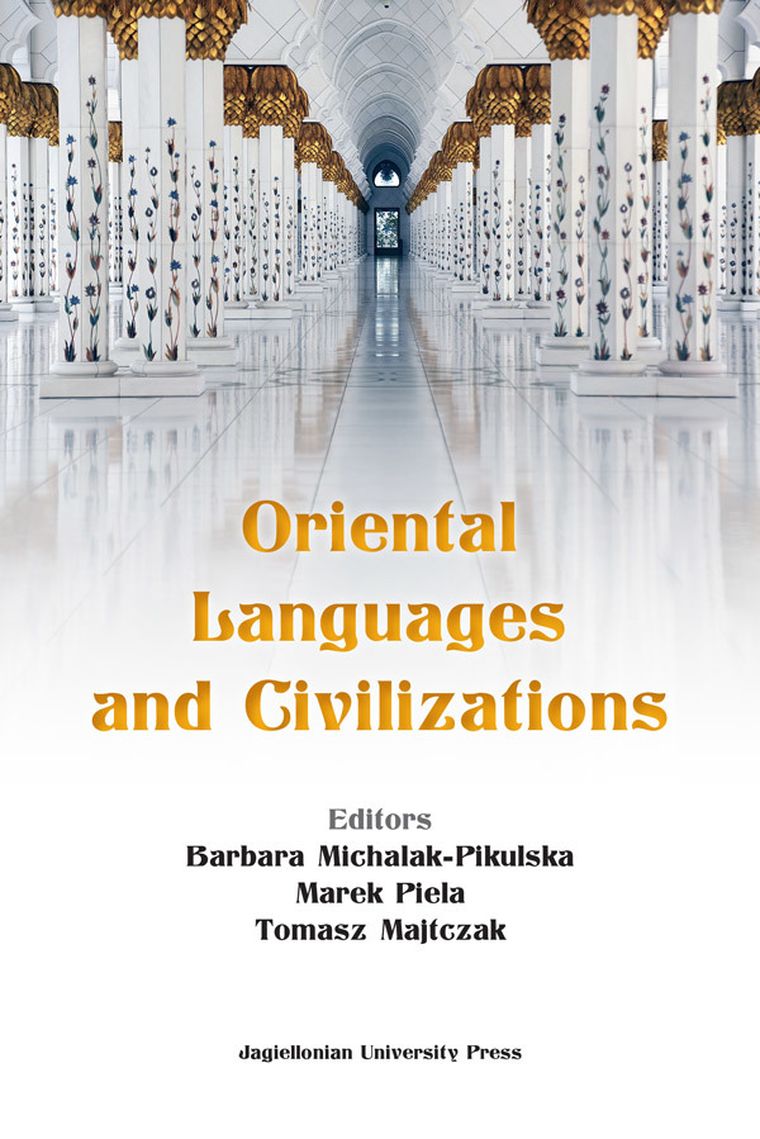
The volume consists of six parts devoted to literature, languages, history, culture, science, religions and philosophy of the Eastern World. Its aim is to portray the present-day state of oriental studies, which are here understood predominantly as philologies of Asia and Africa, but also as a field of study including other, adjacent disciplines of the humanities, not neglecting the history of oriental research. The book’s multidisciplinary content reflects the multi- and often interdisciplinary nature of oriental studies today. Part 1 (Literature) offers new insights into belles-lettres written in Arabic, Hindi, Turkish, Urdu, Persian and Japanese. Part 2 (Linguistics) contains studies on Sanskrit texts (in a stylometric approach), Japanese nominals, Japanese poetry as a linguistic source, Arabic translations of the Bible, Arabic dialect of Morocco, Arabic culinary terms of Persian origin and Turkish vocabulary of the language reform era. Part 3 (History) investigates Napoleon’s campaign in the Middle East, Middle Eastern-Russian relations in the 18th century, the history of Seljuk Empire and the works of a Moroccan historian, Ga?far Ibn A?mad an-Na?iri as-Salawi. Part 4 (History of Oriental Studies) deals with the history of oriental studies in Kraków and with the problems of a critical edition of the Quran. Part 5 (Culture and Science) examines the artistic achievements of Egyptian moviemaker Yusuf Šahin and possible influence of the Muslim science on medieval Polish scholars. Part 6 (Religion and Philosophy) explores some philosophical concepts of the Confucian ethics and the contribution of Karima Bint A?mad Al-Marwaziyya to preservation and transmission of some religious traditions of Islam. Barbara Michalak-Pikulska is the Head of the Arabic Department of the Institute of Oriental Studies of the Jagiellonian University in Krakow. She obtained her Ph. D. in Arabic Literature from the Jagiellonian University in 1994, and now she is professor of Modern Arabic Literature. Marek Piela, PhD, Assistant Professor at the Arabic Department of the Institute of Oriental Studies of the Jagiellonian University in Krakow (Poland). He teaches practical Hebrew and Theory of translation. Tomasz Majtczak, PhD, Assistant Professor at the Institute of Oriental Studies of the Jagiellonian University in Krakow (Poland). He teaches practical Hebrew and Theory of translation. In his academic interests he focuses on Old and Classical Japanese, historical grammar and genetic relationships of Japanese, Old Turkic, Yiddish and historical linguistics and etymology.
Nr produktu: 6802820
:
Producent
:
Przedział wiekowy
:
Płeć
:
Marka
:
Nazwa przedmiotu
:
Licencja
:
Licencja Lego
:
Rozmiar
:
Kolor łóżeczka
:
Materiał zewnętrzny
:
Permanent
:
Buty
:
Aparat foto (mpix)
:
Bateria
:
Rodzaj baterii
:
Bielizna
:
Cechy fotelika
:
Cechy leżaczka
:
Cechy piórnika
:
Cechy plecaka
:
Cechy wózka
:
błędny
:
Czas pracy na akumulatorze
:
Czas trwania
:
Czy produkt wysyłany losowo?
:
Czytnik kart?
:
Autor
:
Długość wkładki
:
Długość wkładki (cm)
:
Dotykowy ekran
:
Dubbing polski
:
Format
:
Format dźwięku
:
Format pliku
:
Format video
:
Gatunek
:
GPS
:
Gramatura (g)
:
Liczba graczy
:
Liczba klocków
:
Liczba kół
:
Liczba nośników
:
Liczba sztuk w opakowaniu
:
Ilustrator
:
Jakość zapisu video
:
Jeans Fit
:
Język
:
Karta graficzna
:
Karta pamięci
:
Klasyfikacja ADAC
:
Klasyfikacja PEGI
:
Koła wózka
:
Lampa
:
Lektor
:
Lektor język
:
Lektor (tak/nie)
:
Liczba kartek
:
Liczba rdzeni
:
Materiały dodatkowe
:
Modem
:
Napisy
:
Nuta zapachowa - On
:
Nuta zapachowa - Ona
:
Obsada
:
Okrycia
:
Oprawa
:
Liczba stron
:
Pamięć RAM (GB)
:
Pamięć wewnętrzna
:
Permanent
:
Platforma
:
:
:
:
:
Zwiększona wytrzymałość
:
Zoom optyczny kamery
:
Zoom optyczny aparatu
:
Zoom cyfrowy
:
Zdjęcia 3D
:
Zdalnie sterowany
:
Zawartość pudełka
:
Wzór, aplikacja, motyw
:
Wysokość buta
:
Wymiary
:
Wymiary materaca
:
Wymiary łóżeczka
:
Wymagania sprzętowe
:
Wykonawca
:
Wyjście HDMI
:
Wydawnictwo
:
Wydanie
:
Wstrząsoodporność
:
Wodoodporność
:
WIFI
:
Wielkość ekranu
:
Wersja językowa
:
Wejście słuchawkowe
:
Wariant
:
Tytuł oryginalny
:
Typ nośnika - elektronika
:
Typ matrycy
:
Typ ekspresu
:
Typ dysku twardego
:
Transmisja danych
:
Tracklista
:
Tłumacz
:
Tematyka/Przeznaczenie
:
Technologia ekranu
:
System operacyjny
:
Sukienki
:
Stroje kąpielowe
:
Stabilizator obrazu
:
Sposób zapięcia
:
Skarpety/Rajstopy
:
Skala
:
Seria
:
Ruchomy ekran LCD
:
Rozmiary konceptu
:
Rozmiar ramy
:
Rozmiar pieluch
:
Rozmiar koła
:
Rozdzielczość ekranu - komputery
:
Rozdzielczość
:
Rok wydania
:
Rodzaj zeszytu
:
Rodzaj zabezpieczenia
:
Rodzaj termometru
:
Rodzaj ramy
:
Rodzaj pieluch
:
Rodzaj perfum - Ona
:
Rodzaj perfum - On
:
Rodzaj nośnika
:
Rodzaj napędu
:
Rodzaj materiału
:
Rodzaj laktatora
:
Rodzaj krzesełka
:
Rodzaj kredek
:
Rodzaj kredek
:
Rodzaj kosmetyków
:
Rodzaj koła
:
Rodzaj farb
:
Rodzaj ekspresu
:
Rodzaj bloku
:
Reżyser
:
Puzzle temat
:
Liczba puzzli
:
Przekątna ekranu
:
Przebranie postać
:
Projektor
:
Procesor
:
Postać z gry
:
Postać pluszaka
:
Pojemność (ml)
:
Pojemność dysku twardego (GB)
:
Przedział wagowy
:
Maks. ciężar dziecka (kg)
:
Temat puzzli
:
Moc (W)
:
Podmiot odpowiedzialny
:
Opis bezpieczeństwa
: